
RANKED: THE TOP 5 CYCLING APPS & COMPUTERS OF 2023
I have spent the last month testing the combined top 5 cycling computers and training to find the all-around best one. #1 is the best value I have seen in a long time…
These are the best GPS bike computers and apps for 2023, based on real-world use by myself, an avid cyclist who rides under several conditions and have been riding for many years. Throughout this review, I will be going through what I believe are the combined top 5 bike PCs and cycling apps, to provide you with insight on what you should use your primary method of tracking performance, planning your route, and analysing your metrics + other general life improving features that can be found on these products. This review is from an experienced cyclist perspective who also factors in the overall ecosystem the product or service provides to improve the experience of the cyclist. Here are the top 5.
1.OVERALL BEST: SBL+ BY SBL IS FREEING CYCLISTS FROM EXPENSIVE BIKE COMPUTERS
Features: 99%
Battery Life: 90%
Price: $ (Subscription starting from $4.99/month and a FREE Cliq)
Key Features: Customisable dashboard, Wide range of training metrics, way-point and route sharing, interactive metric analysis, customisable widgets, interactive goal setting, recovery analysis, smart sensor connectivity, Strava and FaceBook integration, bike and ride selection, light and dark modes, cloud syncing, more.
Connectivity: Bluetooth, WiFi (Smartphone)
Compatibility: Bluetooth smart sensors, Strava, Facebook,
Overall: A++
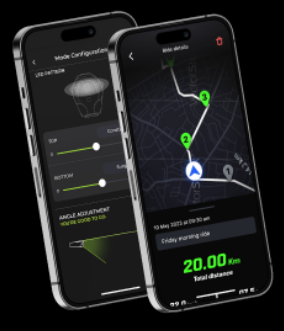
SBL+ is a subscription service accessible through the Smartgrid App, and I have been given the exclusive opportunity to test the pre-launch version. The purpose of SBL+ is to prevent cyclists from spending outrageous amounts of money on cumbersome, quickly out-of-date bicycle computers with very little functions and connectivity. SBL+ is part of an overall ecosystem of cycling hardware and software, which included smart cycling lights, smart gps trackers, smart sensors, and smart mounts, which all work together to improve all aspects of your ride. As part of this testing, I received SBL’s cadence/speed sensors and their heart rate monitor straps, so I was able to utilise all available data metrics in the app.
With so many features to describe, this review will need to be several pages, especially if we talk about the upcoming features too, as part of SBL’s commitment to regular updates and innovation. Therefore to keep things simple, we will touch on SBL’s innovative dashboard, the ride mapping/sharing and routing features, the training and data analysis features, and other elements that help complete the experience. We will lastly touch on SBL’s upcoming features.
The first impression of SBL+ is its intuitive and user-friendly dashboard. On the dash you can plan, monitor, share, personalize, and analyze your trips. You have your bicycle selected, profile set up and ride style. There is also a feature on the top bar called the widget dashboard. We have never seen anything like this before, however here you can essentially select from a long list of widgets to display key information like today’s weather, hydration alerts, recent ride metrics and more. While riding, having this information available is super handy. SBL mentioned that they want to keep adding more widgets and increasing their customizability.
The plan-your-ride feature is clearly visible on the dash, and a huge advantage of SBL+, as it is one of the only premium cycling apps and even PCs, where you can plan your ride without the need of a laptop. The feature is seamless and very easy to use. All you simply have to do select the feature, and add your way points. Once you do this, you will be given a list stops, the distance to these stops, and the option to share them. In the riding screen, you are shown these stops in real time, and are also shown the time required to hit these destinations.
The ride screen is laid out with a cool looking a taco dash that displays up to 6 metrics our 14 available data metrics to be displayed live, plus your speed. The metrics available are far more than you would ever need, and range from elevation, to power output, energy consumed, cadence, heart rate and more. You have the option to amend your route in real time, share it and customise the appearance of your map and scale. When starting the ride, the screen changes to a full-screen mode which keeps you focused on the ride at hand. You can pause your ride to take a break, and/or stop the ride once you feel like you have finished up for the session, where you have the option to save the data and view/analyze detailed and interactive graphs a later point in time, or discard the trip.
After completing your ride, you can entre the activity tab which lists all saved historic rides, which gives a version of your route travelled, and detailed graphs showcasing the metrics you want to look at. The scrubber allows you to view the specific metrics at specific points of your ride, which is awesome. The detailed graphs vary from power output, elevation gained at certain points, heart rate, speed and cadence, distance travelled and so much more. The way it is all laid out is awesome and super easy to view. You also have the option to share your data.
The app used surprisingly little battery, with a 4 hour ride only consumed 15% of my iPhone 14 Pro Max’s battery. To my surprise, I received daily alerts that I had achieved specific targets as part of my regular rides, which I set up using the goals function, which lets you automate achievements. The hydration alerts and weather widgets also notify you about maintaining optimal training conditions. There are several more features like setting up a light or dark mode, integrating Strava, connecting smart sensors, syncing your data, setting up your custom profile and ride style to optimise your data, and connecting your smart lights to optimise the collection of data. Given that SBL+ is part of the Smartgrid app, which is utilised the customise and configure the functions of SBL’s smart lights and smart GPS tracker, you have the added home section, where you can add widgets that showcase your recent performance, and obtain direct and quick access to your smart lights and smart GPS. You also have access to blogs and premium articles while on the go and directly from your phone. There is a social interface and leader board that will get added in due time, however the app is extremely powerful, and having your smartphone mounted on your bike basically gives you access to several pieces of tech + training and routing all at the tip of your fingers.
SBL are offering a unique pre-order price that is limited to the first 1000 subscribers, and this offer is made exclusively through our review. One plan even offers a FREE Cliq. The pre-order subscriber deal is broken down under the following 3 options:
2. GARMIN 1040 SOLAR
Features: 85%
Battery Life: 80%
Price: $$$$$$ ($1000-$1300)
Key Features: Colour Navigation, Wide range of training metrics, V02 Max details, solar charging, recovery analysis
Connectivity: Bluetooth, ANT+, USB-C, WiFi
Compatibility: Garmin Varia lights, ANT+ products
Overall: B+
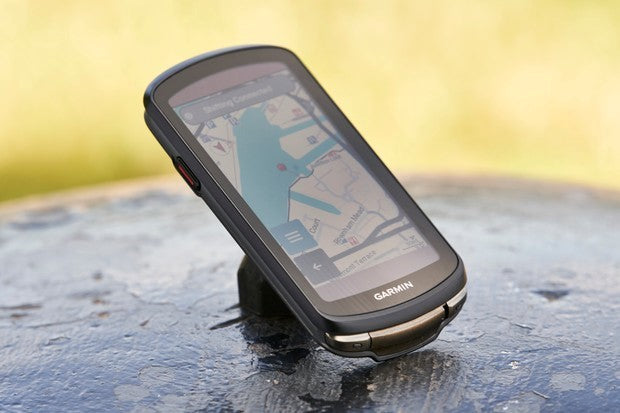
Garmin is an absolute heavyweight when it comes to cycling and fitness technology, and the 1040 Solar bike PC is no slouch. A clever feature of Garmin's newest high-end computer is its solar glass screen that can increase your runtime to an industry-leading and claimed 45 hours, which performs best on rides that are extremely sunny and warm. The Edge 1040 Solar is a large, pricey unit that takes up a lot of room if mounted on your bars, so the accompanying out-front mount is required.
In terms of size, the Garmin Edge 1040 is the successor to the Edge 1030 Plus. It is a few millimetres bigger than the 1030 Plus, measuring 59.3117.6x20mm.
With 64GB of memory, the Edge 1040 provides you with your training status, recuperation time, and other information. The 1040 Solar is much more that just training device, it is fully customizable and keeps a ton of statistics handy amongst its sophisticated classic Garmin style maps.
The 1040 Solar can seamlessly connect to the Garmin training infrastructure, giving you access to several post-ride analysis options and route planning utilizing Garmin's heatmaps from its user community. You can also link data from Garmin smartwatches using Garmin Connect, providing you with a 24/7 analysis of your training and fitness state.
Setting up your Garmin is easy - you can choose to add WiFi connections, set up emergency and Live tracking contacts, and choose a training plan. Garmin Connect's route-planning feature is relatively simple to use and provides a selection of base maps. If you own a power meter, Garmin will also produce a Power Guide on the device or in Garmin Connect, suggesting what power output you ought to strive for on various sections of your route. Throughout the route map, this is shown as color-coded effort levels.
If you look further, the Edge 1040 will identify the climbs on your route, their location, steepness, and length. You are even given guidance on the route's difficulty and its anaerobic and aerobic requirements. The Edge 1040 activates the ClimbPro feature when you encounter a hill, just as other recent Garmin devices show you the gradient breakdown in colour, the current gradient, and the distance to the summit.
If you have the appropriate sensors connected, you can analyze a ton of data, including the average speed and distance metrics, heart rate statistics, and power analyses. Also, Garmin offers its take on Strava segments. They are different than Strava's, but they could be helpful if you want to chart your success over several rides.
You can then push your data to other cycling applications, like Strava or TrainingPeaks. Still, Garmin Connect offers many features that you would typically have to pay for with other platforms for free.
The Garmin Edge 1040 is the bike computer you want if you want something that does everything for you, and are willing to put up with its massive size, weight and price tag. An overall excelling all-rounder with a steep price tag.
3. WAHOO ELEMENT ROAM V2
Features: 75%
Battery Life: 65%
Price: $$$$ ($599)
Key Features: Colour Navigation, Wide range of training metrics, Compatible with Android and iOS, wireless charging, training sensor compatibility
Connectivity: Bluetooth, ANT+, USB-C
Compatibility: Element app, ANT+ products
Overall: B
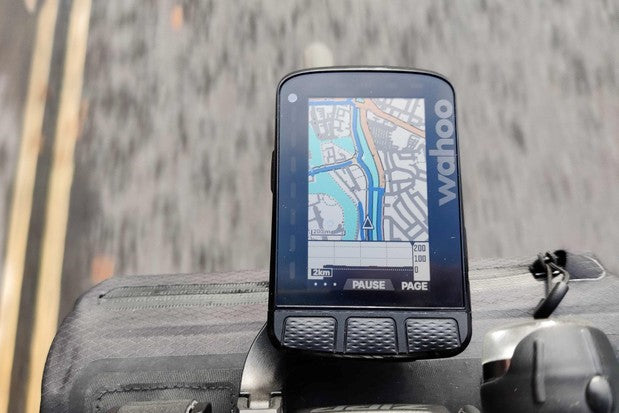
Several of the Element Bolt functions are included in the Wahoo Element Roam V2. Still, the Roam V2 has a larger screen for better mapping capabilities, although the screen quality is rather lacking given their colour choices and quality, which Wahoo says is on purpose, as the color is only used to highlight more important statistics, such as your current heart rate or power zone. Wahoo's products all lack touchscreens; instead, the computer is controlled by a set of buttons, and setup is done through the Element app, which gives them their uniqueness.
Wahoo allows you to customize what you see on the screen. More than 10 custom details can be displayed, which you can order from most to least significant by dragging and dropping. The screen font makes reading all of the data quite easily. But, Wahoo's "Perfect Zoom" feature, operated by the two buttons on the right side of the device, is in-face a clever feature, but also polarizing as some love it and some hate it. For riding data, Perfect Zoom works incredibly well. When you press the button on the upper side, the size and number of displayed fields are increased. If you like, you can only show the data item with the highest priority, such as speed. The lower side button produces the reverse effect.
Perfect Zoom also works well with the map display, as the upper button allows zooming in and the bottom button for zooming out, making the experience easier while you are on the go. Your current position is kept close to the bottom of the screen to give you a better view of the road ahead. Using it while riding is much less complicated than pinching a map or pressing a touchscreen's zoom button.
The LED arrays do an excellent job of relieving some of the strain on the relatively small screen. The top array may display anything from an impending Strava Live segment to an upcoming text message, while the side array can bicycle set up to display speed, power, or heart rate (or be completely turned off).
The Wahoo Element smartphone app makes route selection simple. If you have linked your accounts and are in WiFi range, and have the device connected to your phone, your new route will automatically display in your list of routes on the Wahoo Element Roam. Then, all that is left to do is to follow it.
On the smartphone, you can choose a destination as well, however the lack of a touchscreen becomes more problematic at this point because you must use the side buttons on the device to zoom and scroll which can be cumbersome. If you follow your course, navigation is simple. The maps are well-detailed, but not overly so that you feel overwhelmed.
Wahoo updated the Element Roam with a new feature called the Summit Segment climb profile data, providing a profile for climbs on a pre-mapped route and monitoring your progress as you complete them. Wahoo is playing catch-up here because several bicycle computers, including the entire Garmin line, have long offered this functionality.
The battery life of the Wahoo Element Roam is average at best. Although it does not perform as well as the Garmin Edge 1040 Solar, it still outperforms the Hammerhead Karoo 2 with a comfortable margin of 17 hours and falls just short of the mid-range Garmin devices. Sufficient for most riders, but if you favour multi-day trips its not for you. The Roam includes a USB-C port, so it charges quickly when recharging. I had a 50% increase in just one hour.
Wahoo has improved memory and functionality, enhanced user experience and simplifying data administration. Despite not having a touchscreen, the Roam is simple to operate thanks to the phone app. However, the need for a touchscreen makes it more challenging to use the device for online activities, so you must bring your phone while you ride.
4.STRAVA SUMMIT
Features: 75%
Battery Life: 60%
Price: $$ (Subscription starting from $9.99/month)
Key Features: Wide range of training metrics, way-point setup (requires PC), interactive metric analysis, recovery analysis, smart sensor connectivity, Strava Social Community, Beacon, Segments, fitness freshness, great heart rate data and more.
Connectivity: Bluetooth, WiFi (Smartphone)
Compatibility: Bluetooth smart sensors, Strava, Facebook,
Overall: B
Strava is well known for its social features, and Strava Summit takes it a step further with more interactive and detailed training features that genuinely help improve your performance + mix well with Strava’s already enormous social community. We broke-down the review of Strava Summit into 3 parts. Firstly, its route planning, sharing and mapping features. Next up we test its training features. For the sake of this review being strictly on the Summit aspects of the app, we are going to steer away from the social media related aspects and features. Lastly, its pricing comparison with other similar apps.
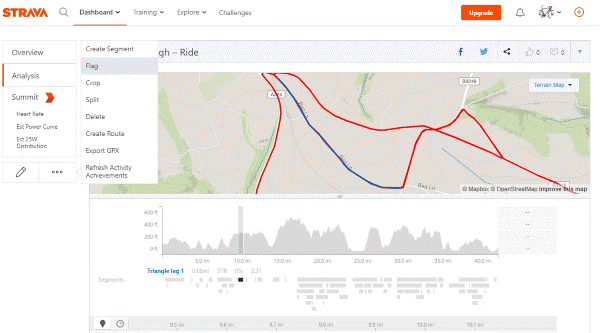
The routing feature is considered as one of Strava Summit’s premium and paid features, and so it should be. There are not many apps on the market that provide good route planning and are not a paid-for-feature. Highly useful, and needs to be set up through your laptop as well (a little cumbersome I might add), Strava will push it all to your phone once complete, and even to your Garmin devices.
Strava’s routing function requires you to find a starting location, select any stopovers, and insert the destination. The software will then plug in the elevation gained, the type of surface, and more. The only drawback is that this needs to be created via a computer, which is a bummer. Whilst on the computer however, you do have access to a feature called heatmaps, where Strava leverages its vast online community to provide you with heatmap data on rides that other cyclists have gone on and shared. Again, this requires a computer which you would use to download and upload the data.
The thing that first attracted me to Strava and kept me coming back was the segments. Segments basically allows you to challenge yourself and essentially make improving your performance a game. With Segments, you compare your efforts against others in popular cycling locations which Strava shares all the data. You’ll be surprised at the random locations where you can undertake these comparisons. There are leader boards where you can post your results which everyone can see, even the non-premium users.
Beacon is awesome. A feature that lets you share your location with anyone so they know where you are during a ride. Beacon is accessible to all users, not just premium subscribers. This primary safety function can be used with a connected phone or cycle computer. During a few rides and runs, I shared my location with a amte, and it worked extremely well.
Moving on to training, Strava makes it easy to become motivated and immediately start working to enhance your performance or fitness. While it undoubtedly aids in getting you on your bike, riding harder, and pushing yourself, it is not an area that it excels at, as its data analysis functions are quite simple. Apps like SBL+ have more options here.
One thing Strava excels at that helps with this is data recording and display in a way that makes tracking progress simple. For instance, if you frequently ride a specific route, you may monitor your development over time by overlaying various performance measures so you can compare them. Although Strava's power estimations will never be as exact as if you were using a power meter, they nevertheless allow you to perform some simple power analysis. This is true even if you don't use a power meter while riding. Utilizing a power meter may obtain more information by comparing Weighted Average Power, Training Load, Ride Intensity, and Power Curve.
Ensuring you are not overtraining and raising your risk of accidents is crucial to training. Strava demonstrates this with its Fitness Freshness feasture, which lets you monitor your fitness, weariness, and form. That implies you can always see when you should train and take a break.
Strava Premium has an annual subscription cost of $69.99, and if paid monthly, it costs $9.99. Strava Premium is a great program that provides various practical tools to help cyclists socialize, push themselves, and improve their training. Some well-known platforms excel at particular aspects, however they are still far from providing the kind of comprehensive package that Strava delivers. Training peaks is priced a little higher at $19.99/month, however value for money and functionality, SBL+ is far ahead with a $6.99 monthly cost, or $49.99 yearly subscription. However, if you are willing to pay the extra price for Strava Summit to access its social media aspects as well, then it is a good option for you. The only other drawback is that you still need to frequent access to your laptop or computer to get the most out of its features.
5. HAMMERHEAD KAROO 2
Features: 75%
Battery Life: 50%
Price: $$$$ ($650)
Key Features: Colour Navigation, Wide range of training metrics, V02 Max details, solar charging, recovery analysis
Connectivity: Bluetooth, ANT+, USB-C, WiFi
Compatibility: Garmin Varia lights, ANT+ products
Display:
Overall: B-
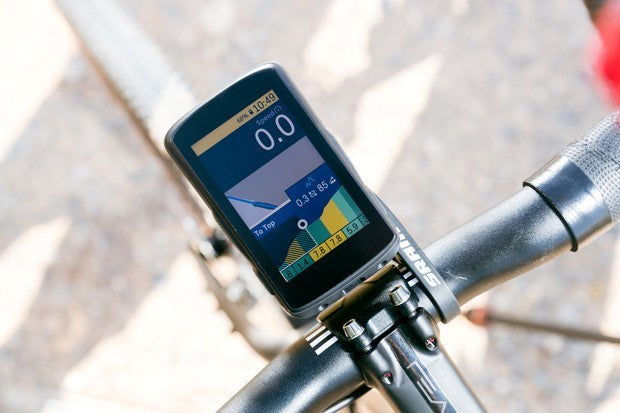
With Wahoo and Garmin dominating the Bike PC market, Hammerhead may be one of many brands that come to mind when you think of the best bike computers. It is a small head unit that performs better than the competition in size, resolution, and display quality. It also has extra capabilities like quick on-device routing and on-the-fly climb profiles. The Android operating system is the foundation of the Karoo 2.
Even over complicated route networks, quick rerouting, and dynamic climb profiles, training information includes time, temperature, distance, speed, altitude, power, heart rate, cadence, calories, and more.
Karoo 2's powerful quad-core CPU and fully customized Android 8 operating system allow for incredibly speedy reactions and processing for tasks like route calculation and dynamic rerouting. Hammerhead offers biweekly software updates and bug fixes, and there is 32GB of internal storage for data and maps. Moreover, the Karoo 2 has a card slot for a 4G SIM, allowing you to connect it to a wireless network without having to carry or use your phone's data.
The vivid color touchscreen has a substantially higher resolution than its rivals. There is no need to pre-plan a route to display the gradient and distance to the peak because the Karoo 2 is currently the only cycling computer that provides climb profiles on the fly as you ride.
The web app has minimal functionality but does enable you to create or import a route and maintain track of your rides, routes, and workouts. The phone app transfers data back and forth to the Karoo 2 without any user interface. For further in-depth post-ride analysis, Hammerhead integrates with third-party programs like Strava or TrainingPeaks.
The computer's bottom edge has a USB-C port for charging, which provides quicker charge times than the micro-USB seen on most competitors. Nevertheless, the Karoo 2's battery life is only about eight hours, which isn't ideal.
Mobile phones appear to function without further charge port protection, yet Hammerhead includes two bungs with the Karoo 2, which the company suggests using for muddy rides. You may pair ANT+ and Bluetooth sensors, such as a rear-view radar, smart lighting, or other tech, using the Sensors option found in the Applications menu,
Some of the data that you have access to are ride duration, maximum speed, and average speed. A second screen displays your speed, distance, ascent, grade, and historical elevation data for the ride. It's simple to view your travel data and determine your destination, thanks to the high resolution, rich colors, and detailed maps with street names.
You may easily plan a route directly on the device by tapping waypoints on the map and letting the Karoo 2 design the routes between them. Once more, it is quick and efficient. A cool feature Hammerhead added to the Karoo 2 is the ability to provide you with a climb profile on the fly, letting you know how steep, how long, and how far up the climb you are.
Stretches with varying gradients, remaining distance, and ascent statistics are shown by distinct colors. Hammerhead refers to this feature as Climber; Garmin's Climb Pro and Wahoo's Summit also offer this feature, but only when you're following a pre-mapped route; in contrast, the Karoo 2 will recognize when you're at the base of a hill and switch to the climb view for you.
Despite the Karoo 2 having what Hammerhead claims is the largest battery ever used in a bike computer, which greatly adds to the device's 132g weight, it has weak performance with its eight hours sufficient for most day rides, but if you enjoy epics or multi-day expeditions, you'll need to use the battery-saver mode or bring a power pack. In contrast, the Wahoo Element Roam and Garmin Edge 830 advertise run times of 17 and 20 hours, respectively.
The Hammerhead Karoo 2 boasts features comparable to its rivals, as well as some attractive extras like Climber while outperforming them with a quick processor and a vivid, wide touchscreen. Although the eight-hour battery life may be an issue for long-distance riders, and there are issues with its app capabilities, however it is still a desirable alternative.
WHY WE CHOSE SBL+ AS OUR CHOICE FOR THE BEST CYCLING APP TECH FOR 2023
The beauty of SBL+ is that it forms part of an ecosystem of hardware and software that SBL created. To use SBL+ you will need to download the Smartgrid app. Smartgrid is an app that was initially developed to customise and configure SBL’s smart cycling lights. This app was further developed to also integrate more cycling technology, provide you access to blogs, premium articles, tracking capabilities for OnTrack (SBL’s smart GPS tracker) and more.
Therefore, using SBL+ is more than just plugging in a bike PC, or opening a random cycling app, it’s part of a lifestyle, an experience that significantly ads to your cycling world in every way by giving you an insane amount of power at the edge of your finer. In addition, SBL has taken things further by creating their own version of a smartphone mount, dubbed the Smart Mount, which utilises vibration dampening technology to eradicate vibration damage on your phone that other mounts induce. The Smart Mount kit also comes with impact proof and water proof cases and a smart adaptor. Every detail of the experience has been well-thought out over years of engineering, feedback and testing, and thus for me, the experience comes together as a complete package that has changed my life for the better, and for that, we believe that SBL+ is the number 1 rated technology in the GPS/App environment.
The current price of SBL+ is limited to the first 1000 subscribers! One plan even offers a FREE Cliq. To secure your spot, head to the pre-order subscriber deal is broken down under the following 3 options:
While you are there feel free to check out the Smart Mount kit which is also offered at 30% off for those who pre-order and subscribe to SBL+! These deals are almost too good to resist so feel free to check them out while they last.
CLIQ against the competition

