

Cycling Gadget Reviews
RANKED: TOP 5 WAYS CYCLISTS TRY TO FIX A STALLED FTP
Same hours, same number, for months. We ranked the five things riders actually do about it, from “train harder” to a full coaching setup, on one question: can it tell you why you’re not getting faster? Four of them can’t. One can.
Our criteria is as strict as it comes
Every option on this list was scored on four things. Does it see how you recovered last night. Does it see what you ate. Does it change tomorrow’s session because of either. And does it ask you first. We don’t score sensor accuracy anywhere on this page. The question isn’t which device measures best. It’s which one does something with what it measures.
1. OVERALL BEST: HELIOS smart ring + THRIVE app

Sees the night: every night
Sees food: yes
Changes the plan: proposes, you approve
Asks first: yes
Overall: A
THRIVE’s claim is that in 2026 no product on the market could see every necessary data point, tie it together and give you one feedback loop, so they built one. After four months I think the claim holds, and here’s why. HELIOS is a titanium ring, 3 to 4 grams, a week or more on a charge, so it’s on your finger every night rather than on a charger. It reads sleep, heart-rate trends and skin temperature and feeds them straight into the THRIVE app. The app isn’t a dashboard. The first time you open it, it asks about you and your goal, builds your first plan, then starts learning you. It builds the nutrition plan that fuels that plan, with photo, barcode and voice logging so you actually use it, and it runs your rides through its own fully equipped bike computer. So the morning number has all three inputs: how you slept, what you’re carrying, what you ate. Then Marco, the coach inside the app, trained on sports scientists and cycling coaches with full context on you, proposes tomorrow. After a bad night he moved my intervals and reshuffled the week. I tapped approve. That’s the thing nothing else on this list does. In a controlled 2019 study on well-trained cyclists, the group whose plan adjusted daily to their own recovery improved peak power, threshold and a 40-minute time trial over eight weeks; the fixed-plan group didn’t. Two limits, stated plainly: power on the bike is estimated, not a meter, and adaptation is once a day in the morning, never mid-ride.
2. A human coach

Sees the night: what you tell them
Sees food: what you tell them
Changes the plan: yes
Asks first: yes
Overall: B
I’d been stuck for a long time before I understood the problem was never the training. The training was fine. It was landing on a rider who wasn’t recovering from it, and none of the four other things on this list could see that, because none of them watch the twenty-two hours between rides.
3. TrainerRoad (Adaptive Training)

Sees the night: no
Sees food: no
Changes the plan: yes, from your ride files
Asks first: no
Overall: C+
TrainerRoad does what it’s built to do: it executes workouts and adjusts the next ones off how you performed in the last ones. What it never sees is why you performed that way. A rider on the Weight Weenies forum described the experience: “It just felt like for an app that is supposed to tell me what to do, I was constantly overriding it to do something else.” Another on the TrainerRoad forum put the same problem more politely: “you don’t really have much choice but to blindly trust the adaptations.” The adaptations come from the ride. Nothing about your sleep or your food goes in, so a bad week reads as “you got weaker” rather than “you didn’t recover,” and the fix it proposes is aimed at the wrong problem.
4. A Garmin watch (Fenix 8 or Forerunner)

Sees the night: only when worn to bed
Sees food: no
Changes the plan: no
Asks first: n/a
Overall: C
The watch produces a readiness number each morning. It gets there from the watch alone, and only on the nights you wore it. It has never seen a meal and it has no plan to change. So on the morning it says 78, that’s the end of the conversation. You still have to decide what 78 means for today’s intervals, which is the exact decision you were trying to hand off. It records a great deal. It decides nothing.
5. “Train harder”

Sees the night: no
Sees food: no
Changes the plan: yes, always upward
Asks first: no
Overall: D
The only option on this list apart from the winner that actually changes your plan for a reason, which is why the coached riders are the ones who improve. The limits are cost and sight. A coach reads what you type into the comments box. They can’t read the night you didn’t mention, and one coach with dozens of riders can’t watch all of them at six in the morning. Keep the coach if you have one. Give them a rider whose recovery is already being read.
WHY WE CHOSE HELIOS + THRIVE AS THE ONLY FIX THAT WORKS
This is what most stalled riders do first, because it’s free and it feels like effort should work. It’s also the most reliable way to stay stalled. A 2014 study in Frontiers in Physiology compared well-trained endurance athletes on different intensity mixes over the same period. The group that spent most of its time easy and a small slice very hard improved on nearly every measure. The group that trained hard-ish most days, the “train harder” group in everything but name, didn’t improve on those same measures. Harder isn’t a plan. It’s the absence of one, and it costs you the recovery the plan needed.

The ring changed the morning. I’d wake up, look at one number, and that number already knew how I’d slept, what I’d carried in from the week, and what I’d eaten. If it was low, Marco had already proposed the easier day and the reshuffled week. If it was high, the intervals stayed. I tapped approve and rode. The joint statement on overtraining from Europe’s and America’s sports-medicine bodies says no single marker tells you where you are; you need several, read together. That’s the thing this does, every morning, without me building a spreadsheet.

The number moved in the first block. Not because I trained harder. Because for the first time the plan knew when I could.
If you’re doing the work and not getting the results you want, it’s probably not your training. It’s that nothing you own decides anything, so every call is yours, and you’re guessing. Stop guessing.
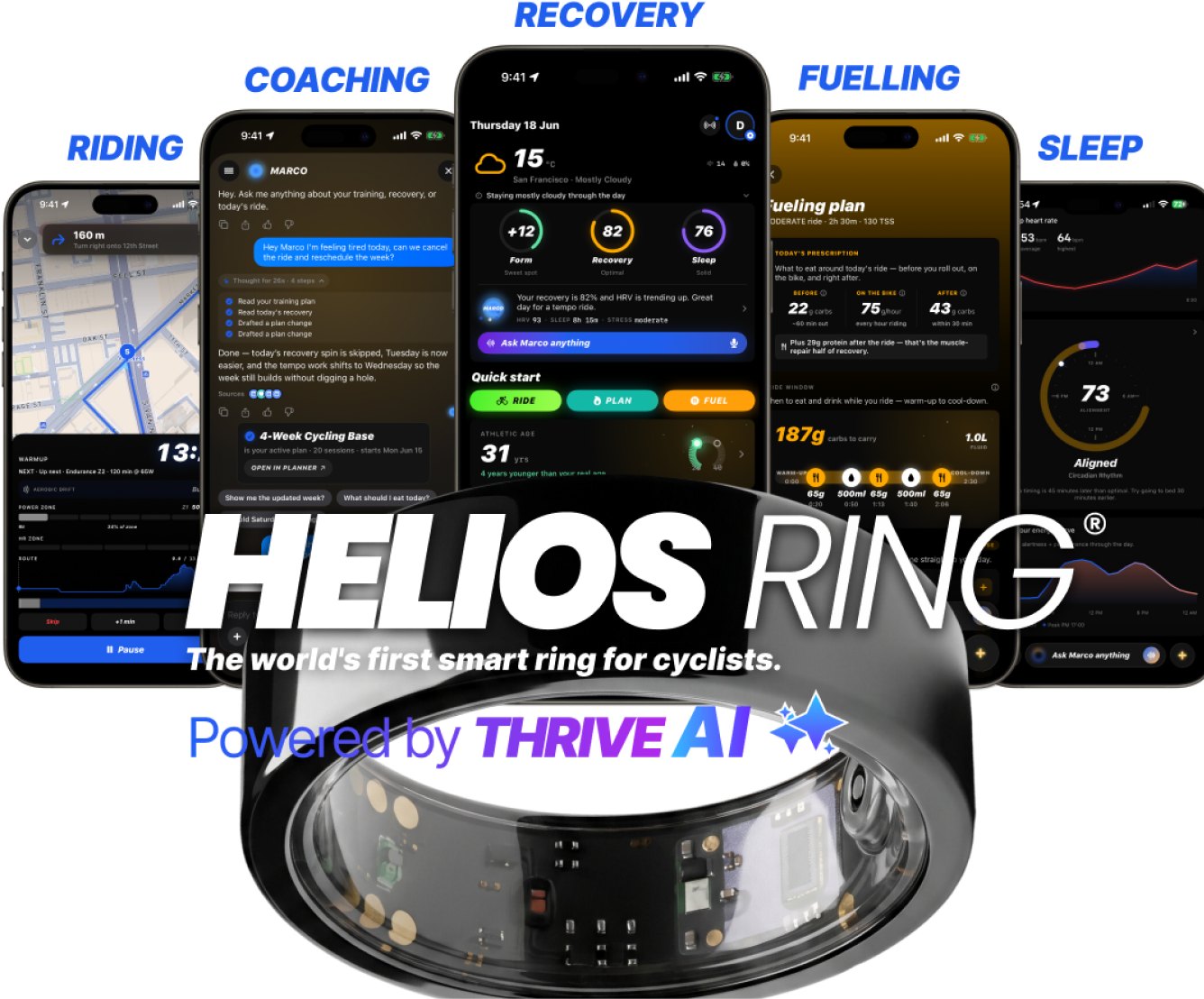
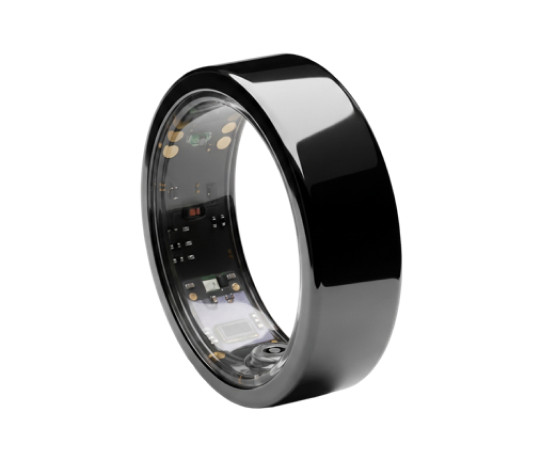
| HELIOS | TrainerRoad | Garmin Fenix 8 | |
|---|---|---|---|
| Worn while you sleep | ✓ | — | If worn to bed |
| Sleep | ✓ | ✗ | ✓ if worn |
| Food | |||
| Training load | |||
| Tomorrow’s session | |||
| Ride computer | |||
| Coach you can ask |
Richard B.
 United States
 Flat for a year, stopped guessing
I’d tried more volume and more intensity. What I hadn’t tried was recovering. It told me that in week one.
Kevin R.
United States
Coach kept, guesswork gone
My coach still writes the block. THRIVE tells us both when I’m not absorbing it.
Liam G.
United States
The ring is the easy part
You forget it’s there. The app is where it happens: the morning number, the proposed change, tap approve, ride.
Mavrick S.
United States
Food was the missing third
I’d never fuelled the hard days properly. It’s in the plan now and the difference is obvious.
HELIOS + THRIVE — 3 TOP REVIEWS
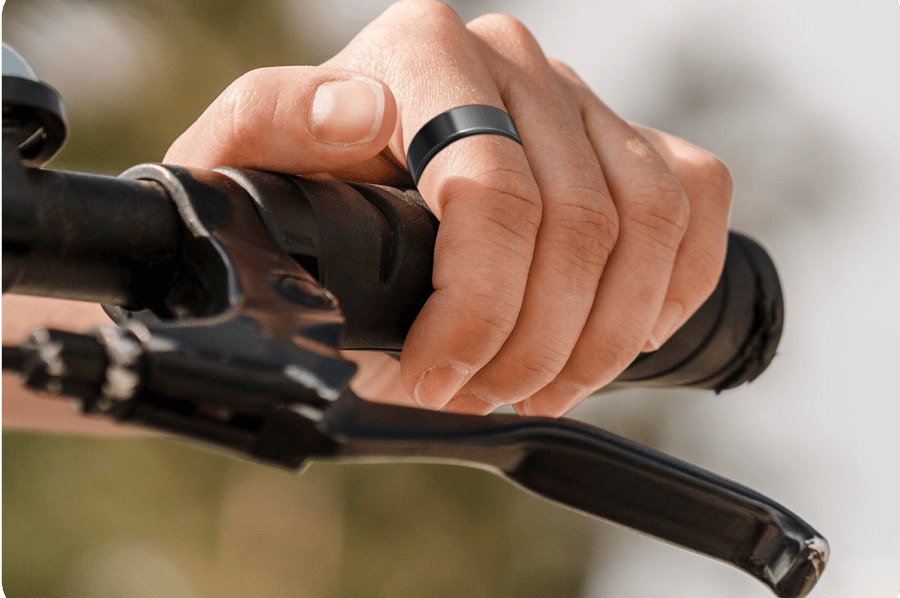
Eighteen months flat. Moved in the first block. — Sarah N., 36
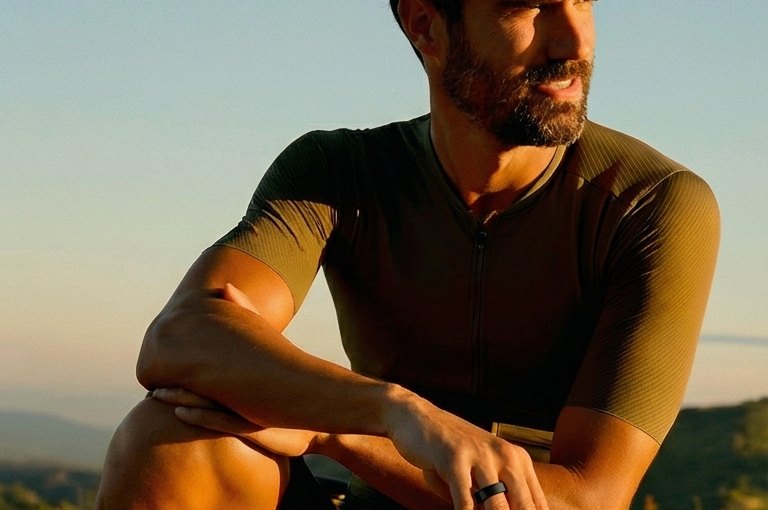
It told me I’d been under-recovering for a year. That was the whole answer. — Dan H., 42
The plan changes when my sleep does. Nothing else I tried did that. — Ellie O., 39