Fit isn’t the same as safe. What every cyclist over 40 should know about their heart.
Most of us over 40 think the riding is what keeps our heart safe. It mostly is. The problem is everything around the riding that nobody plans. I tested five setups that claim to help. Only one looked at all four things that decide recovery, together.

The Saturday group ride: the hardest day of the week for most of us, and the one no plan counts.
The problem
The cyclists who had a scare all said the same thing
Last spring a man from my club, fitter than me and two years younger, was told after a scan that his heart wasn’t in the shape his legs were. Low resting heart rate. More riding than anyone he knew. A doctor who’d said for years that he was in great shape.
Once I started looking, I found the same story everywhere cyclists over 40 talk about their hearts. One, on r/Garmin, after an ablation:
“Turns out I was in constant AFib and could’ve dropped dead at anytime over 2 years and had no idea. Thought I was doing great with my heart health.”
u/Burnt_Phoenix22 · r/Garmin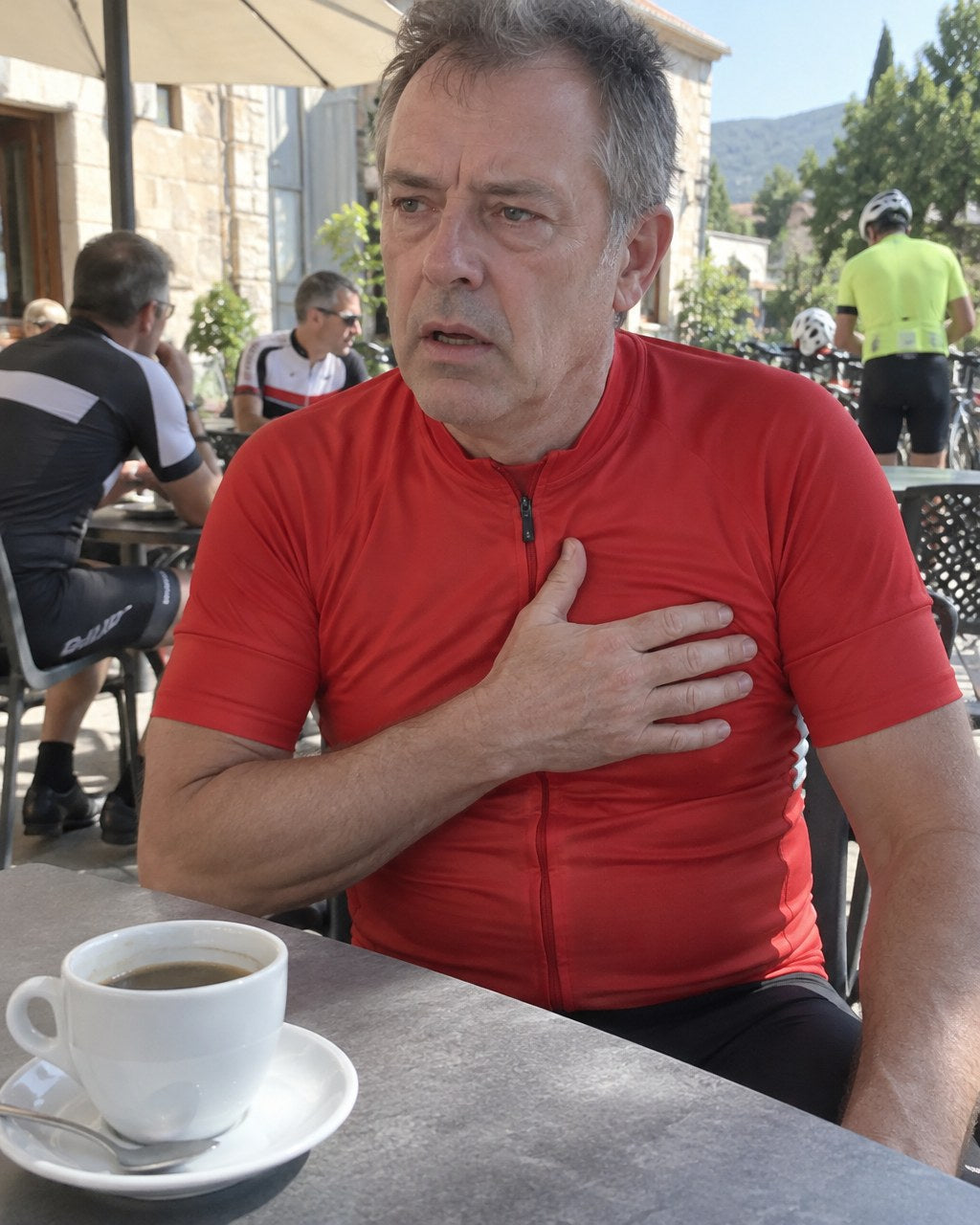
To be clear: riding is good for your heart. In a large UK study, people who cycled to work had a 46% lower risk of heart disease than people who didn’t (Celis-Morales et al., BMJ, 2017 — observational, a link, not proof). And fitness itself protects you: the fittest adults in a large treadmill study had an 80% lower risk of dying from any cause than the least fit (Mandsager et al., 2018).
So the answer isn’t to ride less. It’s to stop riding your heart the way most of us do after 40: hard, often, underfed and under-recovered, with nothing watching what it does to us. If anything feels wrong on the bike, see a doctor first. Then look at the four things around the riding.
What your heart carries comes from four places, and nothing you own looks at all four together
My clubmate’s numbers didn’t show up as a bad ride. Neither did the AFib on r/Garmin. What a heart carries builds up from four places, quietly.
Sleep and strain only count if something is on you every night and all day.
Three weeks of nights. A filled square is a night that was tracked.
So the test came down to this: does anything look at all four together, and change the plan the next day when one of them moves? Every product I tested claims to fix at least one of the four. Only one did all of it.
How I tested
- Four months, five setups, one at a time, through a build block and into winter
- Real weeks: the Saturday group ride, intervals, work travel and one cold
- Each scored on the four problems above, weighted equally
- Points off for every extra app or device I still needed on top
The test winner
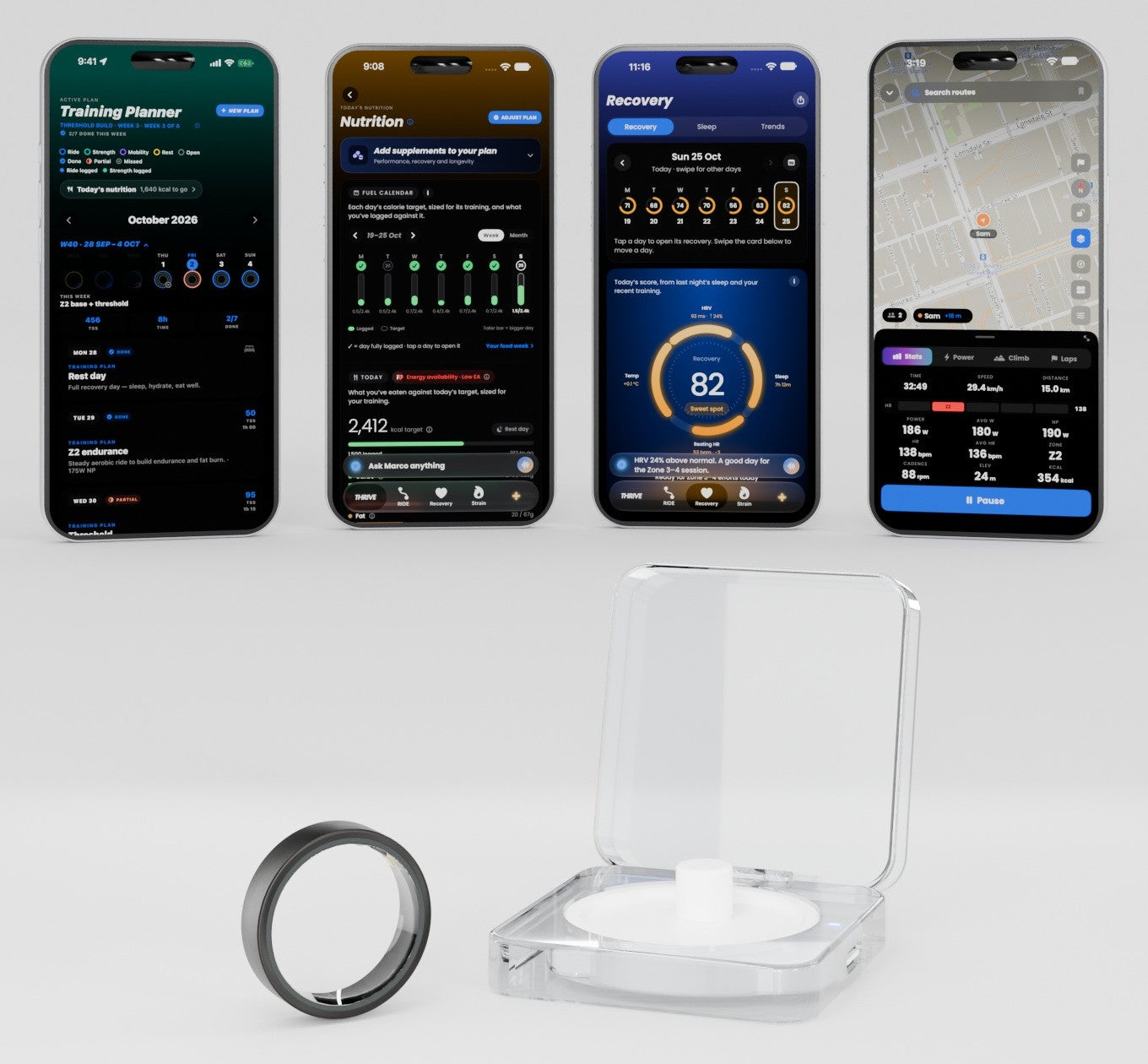
The ring is 2.1 g of titanium and 2.0 mm thin, with 7–10 days a charge and 3–4 weeks more in its travel charger, so it stays on every night and all day: that’s your sleep and your strain, measured. The THRIVE app sets your training load, with the hard days capped and real easy days between them, and sets every day’s food to that day’s training, counted in your recovery. MARCO, the AI coach in the app, watches all four at once, changes the plan when one of them moves, and explains every change. It isn’t a medical device and doesn’t diagnose anything.
- ✓The only setup that counted my Saturday group ride as a hard day and planned around it
- ✓Food and recovery on the same plan as the training
- ✓On every night: 7–10 days a charge, 3–4 weeks more in the travel charger
- ✓Your phone is the ride screen, with navigation and Climbing Mode
✓ 30-day money-back trial · 90-day results guarantee · Free shipping
Stock is limited: 100 HELIOS 2.0 rings this month
What it does when all four pile up in one week
A score can’t show you this part, so here it is on the real app screens, start to finish.
Three hard days in four, two long workdays, three short nights, and the hardest day eaten on too little food. You feel fine. On its own, none of the four looks like much.
An example week. Red is where it starts to cost you.
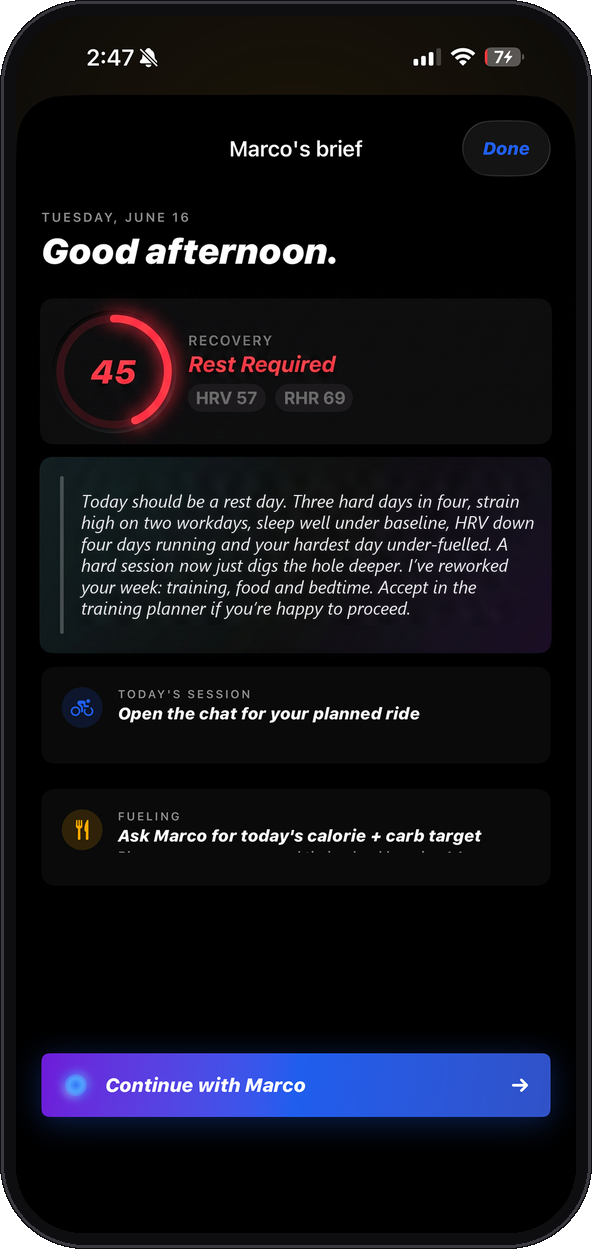 Recovery 45 · rest required · all four named
Recovery 45, rest required. MARCO names all four: three hard days in four, strain high on two workdays, sleep under baseline with HRV down four days running, and the hardest day under-fuelled. The week is reworked, training, food and bedtime, ready for you to accept.
THRIVE brief for the example week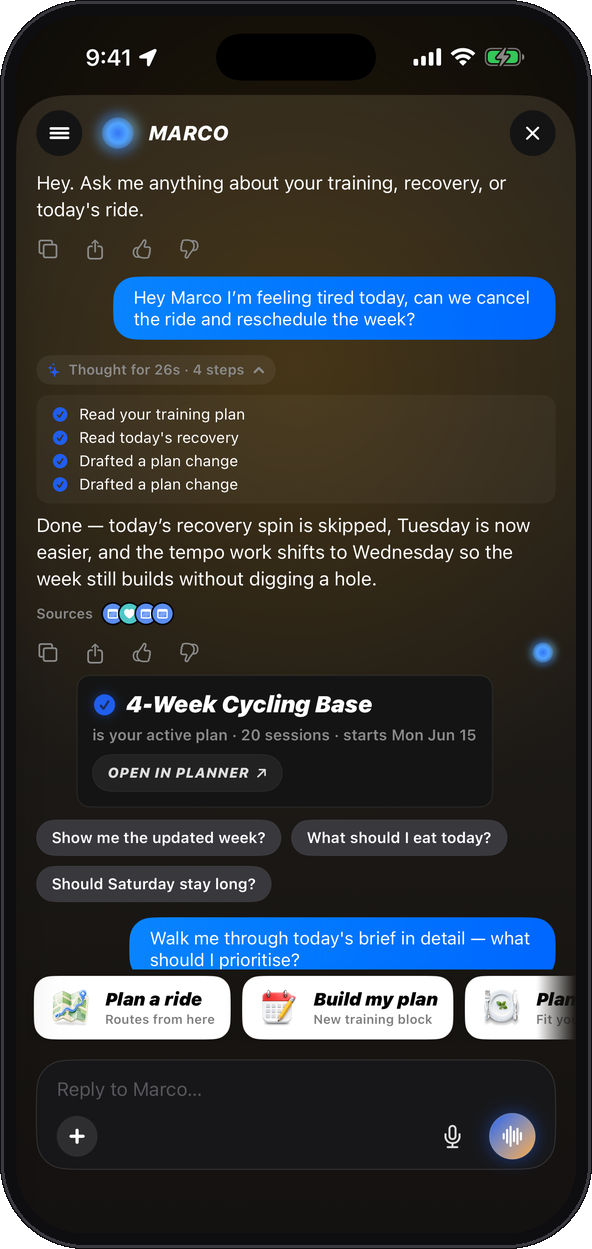 Session skipped · next one eased · tempo moved
Accept it, or ask MARCO about it, and the change is made in front of you: today’s spin is skipped, the next hard session is eased and the tempo work moves a day, so the week still builds without digging a hole.
Real THRIVE screen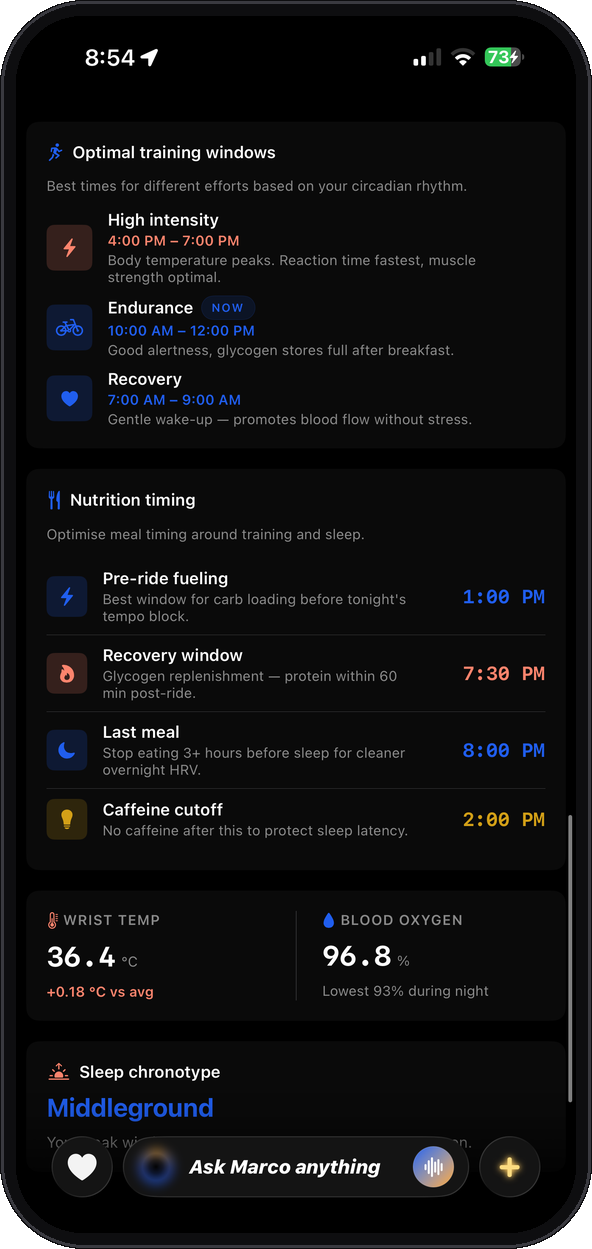 Food timed to the session · sleep protected
Fuelling is timed to the new session, protein within the hour after it, the last meal three hours before bed for cleaner overnight HRV, and a caffeine cutoff to protect your sleep.
Real THRIVE screenFour things piling up, caught on day five instead of after a scare. No number left for you to work out. The plan changed, and the reason came with it.
They sell devices. A bike computer is sold on the ride, a watch on the wrist, a training app on its workout library. None of them is paid to plan your whole week, so none of them does. THRIVE was built the other way round: the plan first, and one ring to keep it up to date.
The rest of the field
A good coach caps your hard days and builds rest weeks into the block. But they only know what you tell them. They don’t see the three short nights or the resting heart rate that’s crept up five beats, and most don’t plan your food day by day.
- Caps the hard days
- Sees only what you report
- Food rarely planned
TrainerRoad gives your rides structure and adjusts the next workouts from how you rode the last ones. It never sees your night. A cold or a run of short sleep only changes the plan if you log it yourself, and there’s no food plan at all.
- Structured rides
- Never sees your night
- No food plan
It gives you a readiness number and suggested workouts, but only for the nights you wore it to bed, and most cyclists I know take a watch that size off at night. It doesn’t cap your week, plan your food or plan your recovery, so the number arrives and the decision is still yours.
- Readiness number, if worn
- No week plan
- No food or recovery plan
It’s what most worried cyclists over 40 do first. It doesn’t change how much of your riding is hard, and it costs you the fitness that protects you. Of everything I tried, it felt safest and did the least.
- Hard days still uncapped
- Loses protective fitness
What each one covers
| HELIOS 2.0 | Coach | TrainerRoad | Fenix 8 | |
|---|---|---|---|---|
| Training load: hard days capped | ✓ | ✓ | its own workouts | — |
| Strain: tracked day and night | ✓ | — | — | if worn |
| Sleep: tracked every night | ✓ | — | — | about 1 night in 3 |
| Nutrition: set to each day, counted in recovery | ✓ | rarely | — | — |
| All four on one plan, changing together | ✓ | if told | — | — |
| A coach watching all four | AI, every day | what you report | — | — |
| What you still need on top | nothing else | tracker, food app | tracker, food app | plan, food app |
The verdict
Get your heart checked. Then get the whole week planned.
Fitness protects your heart. What wears it down after 40 is the load nobody plans: hard days with no cap, food that doesn’t follow the training, recovery left to chance and nothing watching the nights. Every other setup I tested covers one of those at most. HELIOS 2.0 with the THRIVE app is the only one that looks at all four together and changes the plan when one of them moves. It’s my test winner.
The world’s thinnest, lightest, slimmest smart ring. Beautiful, and made to be worn 24/7 for every occasion.
The world’s slimmest and lightest smart ring: 2.0 mm thin, 6.5 mm wide and 2.1 g of matt black titanium, so it stays comfortable on the bike, at work and asleep. It fits under cycling gloves.
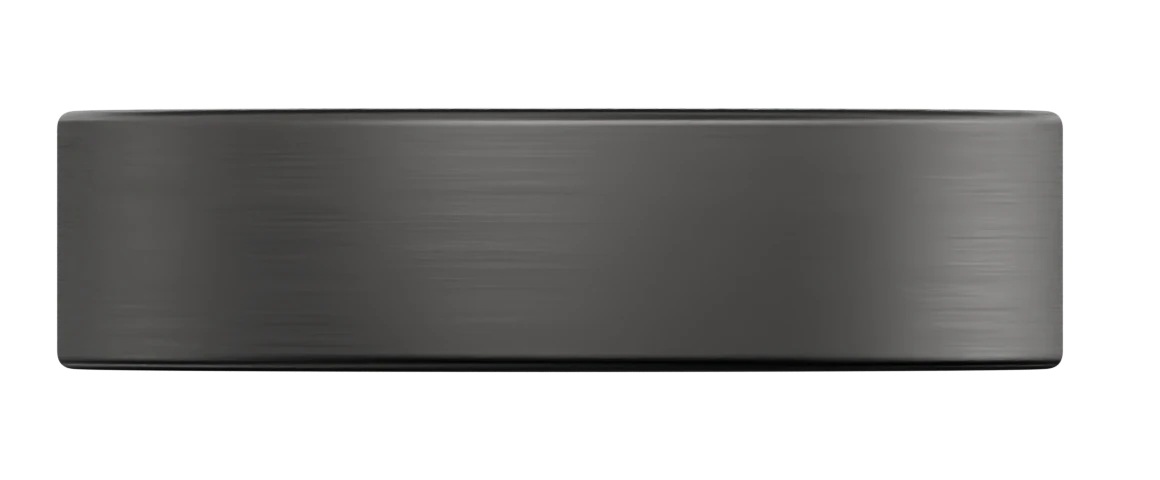
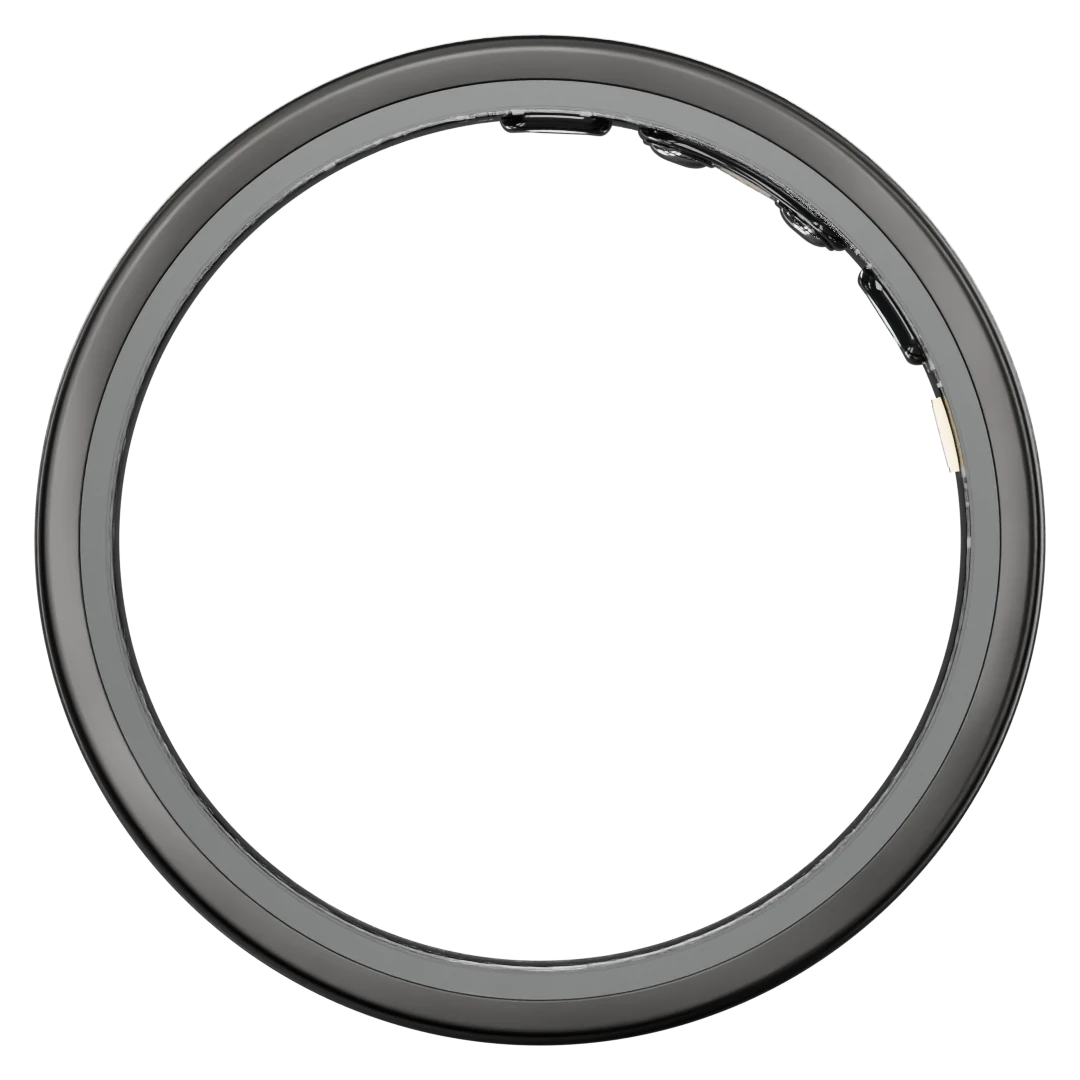
It comes off because it’s bulky in bed or on the bars, or because it needs charging, so whole nights and days go missing.
Typically pretty ugly, and not something you wear to work or to dinner, so it comes off and the gaps start again.
Thin and light enough to sleep and ride in, beautiful enough for work and dinner, and 7–10 days a charge, with 3–4 weeks more in the travel charger. It stays on.
“Stupid as it sounds, this is the first wearable I haven’t taken off in 6 weeks. No bulk, sits flat under my work glove, charges in 45 min.”
Owen Bartlett · Verified buyer✓ 30-day money-back trial · 90-day results guarantee · Free shipping
Stock is limited: 100 HELIOS 2.0 rings this month
How many more seasons will you ride hard on a heart nobody is watching?
The Saturday ride at 80
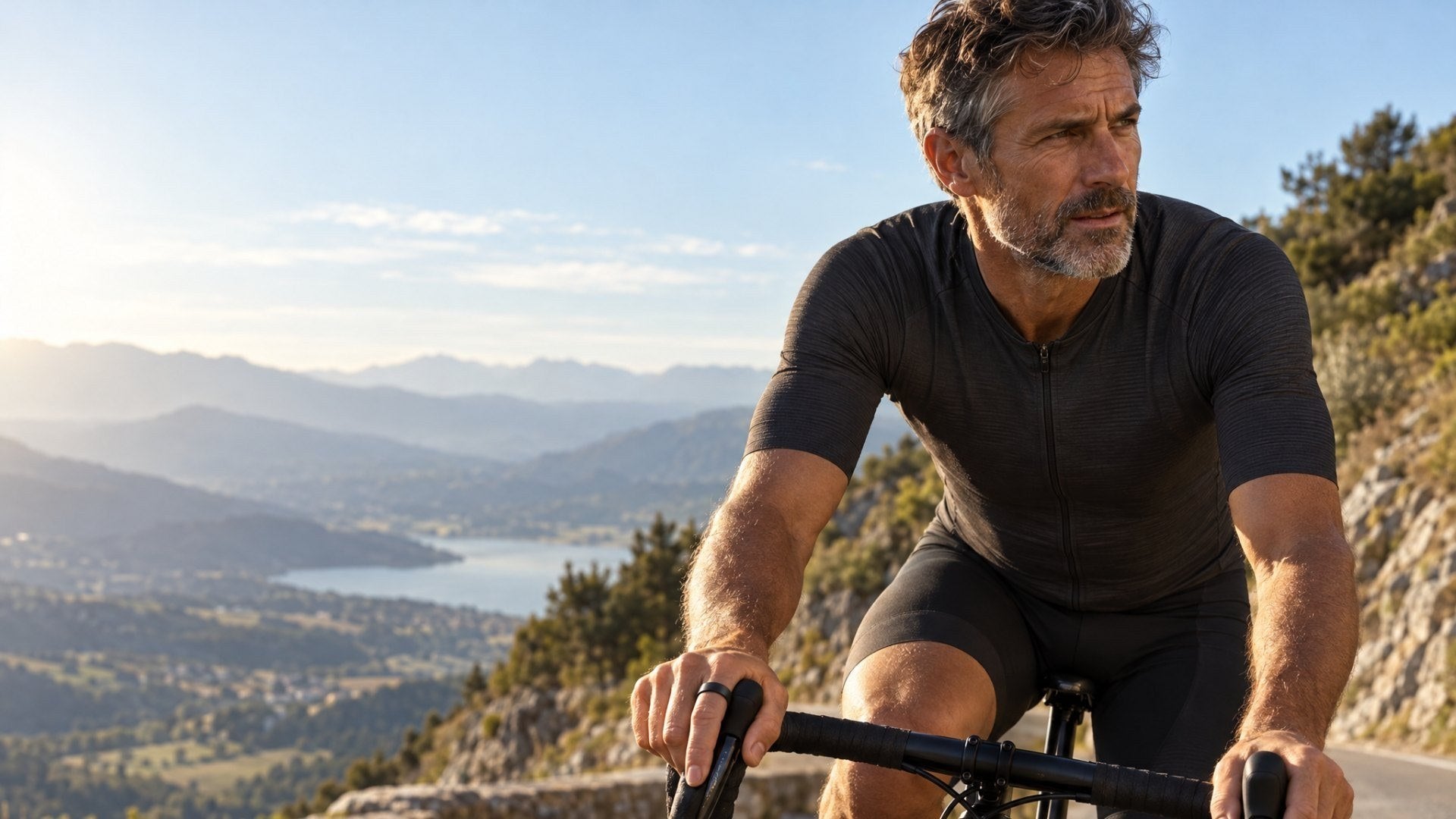
Ask cyclists over 40 what they want from the next 30 years and nobody names a number. They want to still be on the Saturday ride at 80, on the wheel up the climb everyone races. A week in the mountains at 65 without a second thought. Riding with their kids when the kids are finally fast enough to drop them, and not letting them.
That’s what the hard days are for. Trained, fed, slept on and watched, they build those years. Left to chance, season after season, they’re what puts them at risk.
Here’s what the setup most of us run costs. Each piece sees one of the four at most, and none of them sees them together.
US list prices, checked August 2026.
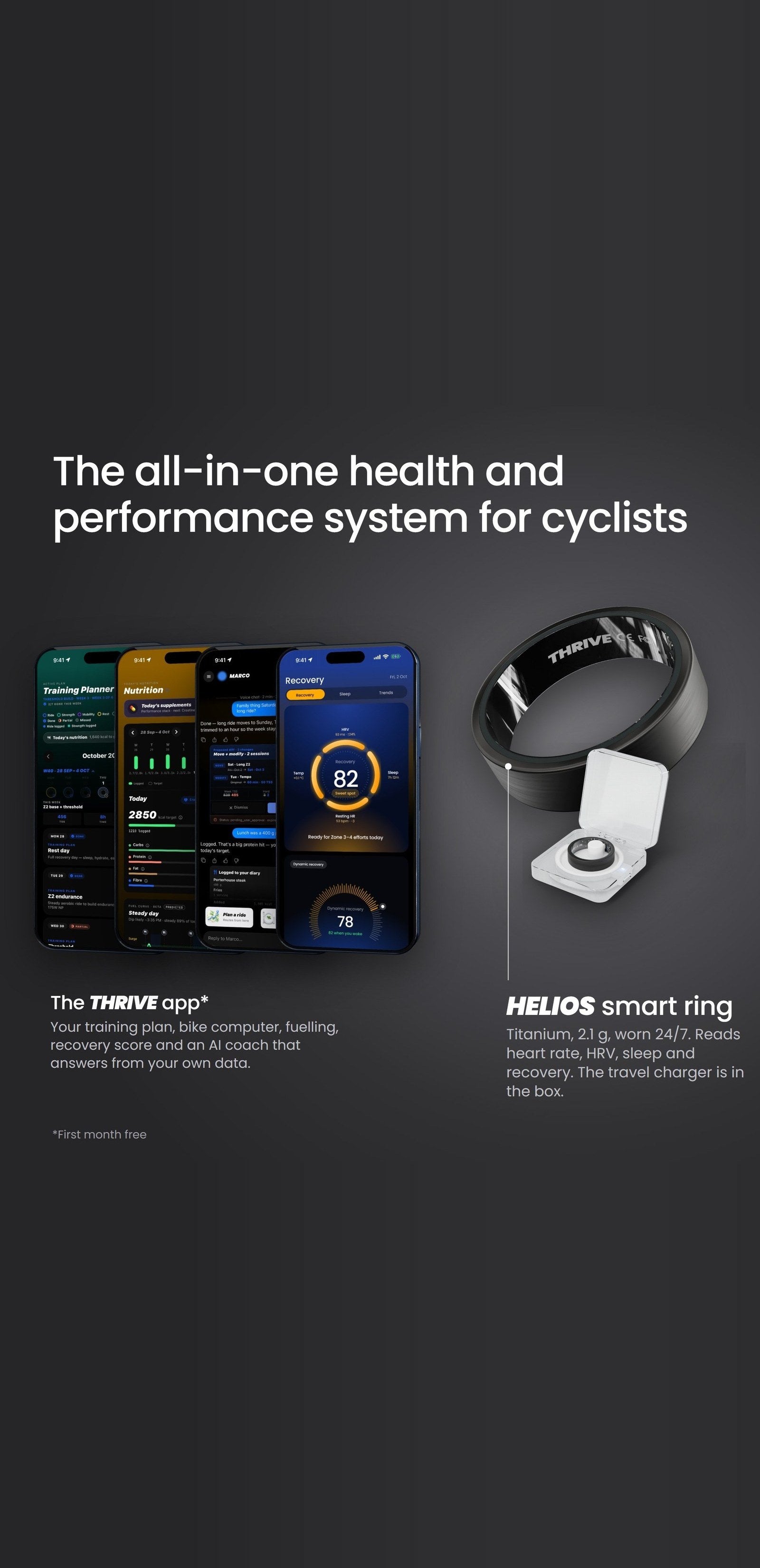
HELIOS 2.0 with travel charger + the THRIVE app
For readers of this article: your 90-day guarantee is set on your heart numbers, not your watts.
- HELIOS 2.0 titanium ring + travel charger2.1 g, 7–10 days a charge, 3–4 weeks more in the charger
- Sleep, tracked every nightResting heart rate, HRV, skin temperature and blood oxygen while you sleep
- Strain, tracked day and nightEvery ride, every workday, every stress
- Every day’s food set to your trainingCalories, carbs and protein, counted in your recovery
- A training plan that caps your hard daysReal easy days and strength, in phases
- MARCO, the AI coach watching all fourExplains every change, and moves the plan when you ask
- Your 90-day heart targetSet with our team after your first week of nights
Stock is limited: 100 HELIOS 2.0 rings this month
Get HELIOS 2.0 →✓ 30-day money-back trial · 90-day results guarantee · Free shipping
Try it for 30 days. Get results in 90, or your money back.
Wear it for 30 nights. Not for you? Send it back for a full refund.
Your target is set on your heart, with our team, after your first week of nights: for example, resting heart rate back at or under your own baseline by day 90. Miss it and we refund you in full.
Plus a 2-year warranty, free shipping and a free sizing kit before you commit.
Coaches, cyclists and clinicians
 Nutritionist’s viewOliver, sports nutritionist10 years with endurance athletes▶ Watch Oliver’s video
 Nutritionist’s viewLina SorensenSports nutritionist and endurance fuelling coach
“Riders over 40 recover slower, and most plans ignore it. Seeing sleep and HRV each morning lets them fuel and rest for the body they have.”
What THRIVE cyclists say
“MARCO flagged ‘three days of suppressed HRV and elevated resting HR — recommend two days easy’. I ignored him, did the threshold workout, blew up. Now I listen.”
Camille Dufort · Verified buyer“MARCO kept me from blowing up at the wrong moment three different times across 28 hours of riding. Fueling reminders alone earned the subscription.”
Henrik Sørensen · Verified buyer“I have sensitive skin and a chest strap was hell on every long ride. This replaces it and the readings are within 1-3bpm of my old strap on intervals.”
David Chen · Verified buyerBefore you buy
Is HELIOS 2.0 a medical device?
No. It doesn’t diagnose anything. If you have symptoms on the bike, see a doctor first. It tracks you every night so the plan can change when you’re run-down.
I feel fine. Do I need this?
Feeling fine is when most of us stop paying attention. A resting heart rate that creeps up over a month is easy to miss when nothing is watching it.
Will I lose fitness?
No. The plan keeps two hard days a week and makes them count, with easy days and strength between them.
Can I keep my bike computer?
You can ride with what you like. HELIOS 2.0 and the THRIVE app do the job on their own, and every ride feeds the plan. When you want a ride screen, THRIVE’s ride mode has navigation and Climbing Mode.
What if it doesn’t suit me?
There’s a 30-day money-back trial.
So you’ve got two options
Keep riding hard and trust that being fit means being safe.
Put your training, food and recovery on one plan, tracked every night, with 30 days to send it back.
✓ 30-day money-back trial · 90-day results guarantee · Free shipping
Stock is limited: 100 HELIOS 2.0 rings this month