Review > Cycling > Lights > 2026
Cycling Light Test 2026: Why drivers “see you at the last second” with your light on – and the one light that talks like a car
Charged, flashing, and still hit from behind? The problem usually isn't brightness — it's that a bike light only ever says “cyclist here”. It never says “slowing”, it shines into the eyes that need to read it, and it's only on if you remembered. The test winner does what every car has done since 1986: it brakes, dips and switches itself on.

By Marcus Chen , Cycling Tech Analyst
Complete-Light Analysis

Beam cut-off (StVZO §67)

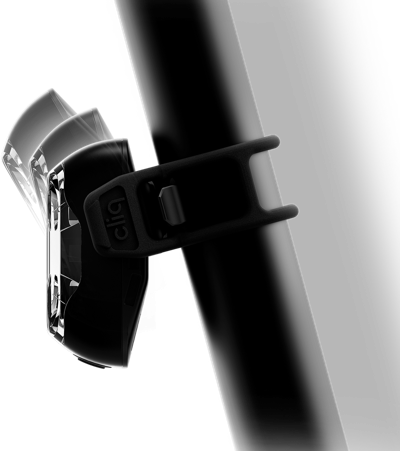
Farina + Cliq on the bike
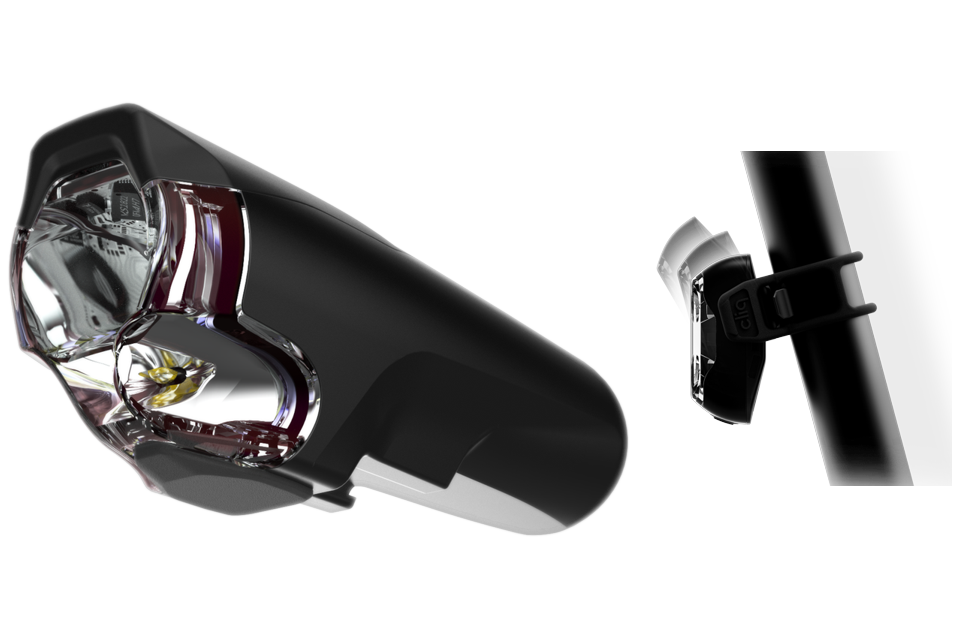
Every rider who's been hit says the same thing: the light was on. A rider on the TrainerRoad forum described it exactly — 8:30am, bright sun, straight flat road, flashing taillight. “A driver who wasn't paying attention came up behind me, saw me at the last second, slammed on his brakes, and rear-ended me.” He heard the brakes for half a second before the hit. His light was working perfectly. And here's the truth nobody says out loud: a brighter light would not have changed that.
The lights make it worse, because each one only does one job. The front light blinks. The rear light blinks. Neither one says “slowing”. Point the front one where it's brightest and you dazzle the driver who has to avoid you — a truck driver's PSA on r/cycling, 274 upvotes: “if you point your bicycle's main light directly at drivers' eyes, it blinds them and makes you harder to see.” And the whole system depends on a switch you have to remember at 6am and again at 6pm. Nothing on the bike does what the car behind you does automatically.
Here's what six months of night testing actually showed: whether a driver reads you doesn't run on lumens. It runs on five things at once — a brake signal they already understand, a beam shaped so it lights the road and not their eyes, a light that is on without you deciding, a body that survives rain and cold, and a unit that's still on the bike when you come back for it. Get those five working together and 1,100 lumens is plenty. Miss one, and the other four pay for it.
In our search for a light that behaves like a vehicle instead of a torch — one with a motion sensor and a light sensor, not a bigger battery and a louder strobe — one front light and its matching taillight stood out clearly. This light doesn't just make you visible. It makes you readable.
While conventional lights count lumens, this test winner reads all five — it flares solid when you brake, cuts the beam off at the horizon the way a car's dipped beam does, comes on by itself when the light drops, seals to a published standard, and sounds an alarm if the bike moves without you. Everything lives in one app, so the front and rear light behave as one system.
Instead of another flashing pattern, the road gets a message it already knows how to read: “cyclist slowing.” “Cyclist here, and I'm not in your eyes.” “Cyclist still here at 5:45 when the sun went.”
Our rigorous testing protocol:
✓
Signal: Does the light tell a driver you're slowing — or just that you exist?
✓
Beam shape: Does it light the road with a real cut-off, or shine into oncoming eyes?
✓
Always-on: Does it come on by itself at dusk, or only if you remembered?
✓
Sealed & sustained: Does it survive rain, cold and a full winter commute week — or die mid-block?
9.8
Overall grade
🏆Test winner 2026.
Quality grade: VERY GOOD
First place: Test winner
Best value
Farina by THRIVE
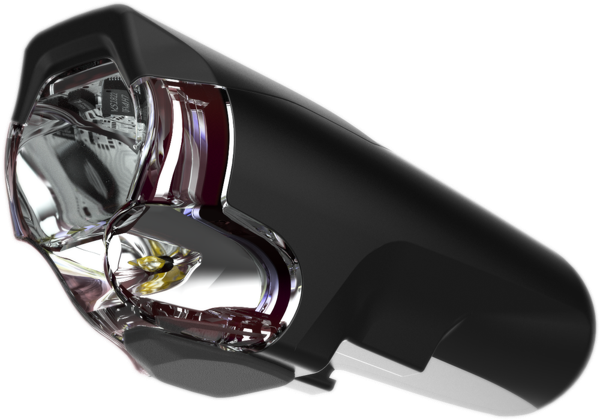
The first bike light that brakes, dips and switches itself on — with the Cliq taillight thrown in free.
Brake signal (motion sensor)
9.9 / 10
Beam cut-off (StVZO §67)
9.9 / 10
Auto-on + sealed body (IP67)
9.7 / 10

A brake light drivers already read — the motion sensor flares the taillight solid when you slow, the signal every car has carried since 1986
A shaped beam with a hard cut-off — 1,100 lumens on the road, none in oncoming eyes, built to Germany's StVZO §67
On before you remember — the ambient sensor switches it on when the light drops and off three minutes after you stop
Sealed to a standard, not a word — IP67 (IEC 60529): dust-tight, submersible to a metre
A charge you don't babysit — LG 21700 cell, up to 20 hours, USB-C, three-hour charge
Stays on the bike — the same motion sensor sounds an alarm the moment the bike moves without you, and pings your phone
Beam note: because the cut-off keeps light out of drivers' eyes, on max it looks dimmer head-on than a 3,000-lumen flood. That is the point — the road is lit, the driver isn't.
Free Cliq: the matching taillight comes free with the first 500 Farina orders only. After that the pair is never free again.
• Free Cliq included
Go to Test winner
One front light + one taillight + one app — brake signal, cut-off beam, auto-on, anti-theft alarm.
30-day money-back guarantee.
iOS + Android.

Expert knowledge: the five things a driver actually reads
“Cyclists systematically overestimate their own night-time visibility to drivers — the rider is sure they've been seen, and the driver hasn't seen them.” The one peer-reviewed trial of an always-on bicycle light — 1,845 bikes in 2013, replicated in 2025 with 5,380 riders — cut night-time multi-party accidents by 71%. Not a brighter light. A light that was on.
— Wood, Tyrrell et al., Accident Analysis & Prevention, 2013 · Madsen 2013 / Hels 2025†

The Blink (One Job)
A normal light does one thing: blink. It never says slowing, it shines wherever you aimed it, it's on only if you remembered, and it lives in your pocket so it doesn't get stolen.
✓ Farina + Cliq (Reads like a car)
Brakes when you brake, dips the beam out of oncoming eyes, switches itself on at dusk, seals to IP67 and guards itself with an alarm. One system, one message the road already understands.
How we score in 2026 — the Complete-Light Score
Every light is rated against the five things that decide whether a driver reads you: a brake signal, a shaped beam, auto-on, a sealed body with a real-world battery, and a unit that stays on the bike. A light can be flawless at brightness — but if it covers one of five, it can't score near the top, however many lumens it puts out. That's not a knock on the LED. It's an honest measure of how much of the road it actually talks to.
2nd place
8.1
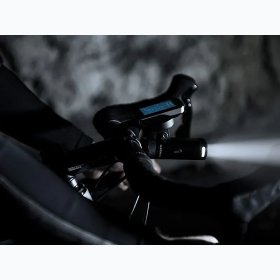
Exposure Strada MK12
THE BEST BEAM IN THE TEST — ONE OF FIVE SYSTEMS
Exposure deserves credit: the Strada MK12 has the best-shaped road beam of anything we mounted, 1,700 lumens with side illumination, its AKTiv feature dims automatically when it detects oncoming traffic, and the OLED readout for battery and mode is genuinely useful. It sees the road perfectly. But it's blind to everything else on the list: no brake signal to the driver behind you, no auto-on so it's lit only if you pressed the button, no alarm, and no app to change any of it. At around $450 it's also the most expensive unit here, for a front light alone. Score the beam and the build and it's near the top. Score the whole road — signal, auto-on, alarm, price — and the Strada covers one of five. That's the gap: not worse optics, just a fifth of the job.
Best-shaped road beam in the test
AKTiv auto-dim for oncoming traffic; OLED readout
No brake signal, no auto-on, no anti-theft alarm
No app — modes and brightness are fixed at the button
Lack of road depth: the focus is entirely on the beam, while what the driver behind you reads, whether it's on at dusk, and whether it's still on the bike go completely unaddressed. Around $450 for the front light only.
3rd place
7.9
Garmin Varia UT800
A well-made torch — the flagship everybody buys, and it still only blinks
The UT800 needs no introduction and it's a well-made light: 800 lumens on high, solid mount, and up to 16 hours if you run it low. But it stops at “cyclist here.” There is no cut-off line, so on high it goes straight into oncoming eyes; there's no motion sensor, so the driver behind you gets no brake signal; there's no ambient sensor, so it's on only if you remembered; and on full output it's dead very quickly. Its one smart trick is talking to a head unit you'd have to buy separately. A dependable light for people who already own the rest of the ecosystem — and a torch to everyone else on the road. Two of five at best.
Solid build and mount; 800 lm on high
Up to 16 hours on the lowest mode
Pairs with a head unit for on-screen control
No cut-off line — full beam goes into oncoming eyes
No brake signal, no auto-on, no alarm
Around $180 for a front light that still only blinks
4th place
6.6
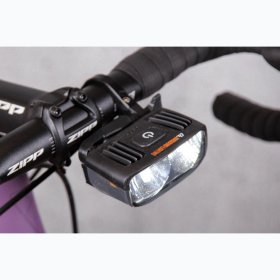
Outbound Trail Evo
A superb trail light, but built for the woods, not the road
The Trail Evo is the most honest product on this list: a wide, evenly lit 2,200-lumen trail beam, a self-contained unit that shrugs off rock strikes, USB-C pass-through charging. On a fire road at night it's excellent. It just isn't built for traffic — the beam is wide and unshaped by design, so on the road it lights the trees and the driver's eyes equally; there's no brake signal, no auto-on, no alarm, and no app to change modes. A big, bright, well-made flood for riding where there are no cars.
Wide, even trail beam
Robust self-contained body
USB-C pass-through charging
No cut-off — a flood beam that dazzles on the road
No brake signal, auto-on or alarm
Bulky and utilitarian; no app control of modes
5th place
6.2
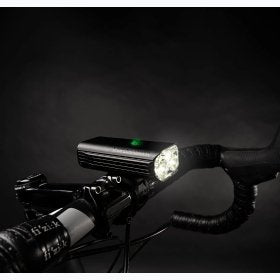
Magicshine RN 3000
Three thousand lumens, and the driver still can't read you
The RN 3000 is a powerhouse: 3,000 lumens, a 10,000mAh cell that doubles as a power bank, USB-C fast charging, and genuine value for the money. It sees a little of everything and goes deep on none of it — the anti-glare lens takes the edge off but it's still a flood, not a cut-off; there's no brake signal, no auto-on, no alarm and no app. And the size and weight that make it a great power bank make it a poor road light. Independent bench tests of the brand's Ray 2600B measured about 1h15m of real full-beam runtime against 3h30m on the box — the claim on the box is not the number on the road. A slice of everything, the whole of nothing.
3,000 lm and a 10,000mAh cell
Doubles as a power bank; USB-C fast charge
Great value per lumen
Big and heavy for a road bike
No brake signal, cut-off, auto-on or alarm
Runtime claims outrun bench measurements
The Editorial Verdict: From Being Lit to Being Read
Written by - Marcus Chen, Cycling Tech Analyst
The cycling-light market splits into two camps: premium road lights that shape the beam beautifully and do nothing else, and lumen monsters that flood the road, the trees and the driver's eyes equally. Both are selling you one-fifth of the picture.
After six months of night testing, Farina is the clear overall winner. It makes being read by traffic genuinely automatic by combining a real cut-off beam with the two sensors a car has always had — motion and light — and it does it at a fraction of the price of the light that only has the beam.
The decisive advantage: the brake light. What sets Farina and Cliq apart is a message the driver behind you already understands. Every car sold since 1986 carries a third brake light, and NHTSA's long-term study found that one lamp cuts rear-end crashes by 4.3% on its own. Clemson's conspicuity work found dynamic taillights are detected earlier than static ones at night. Farina doesn't simply blink louder; it tells the car behind you that you're slowing, in the language it already reads a hundred times a day.
More than that, the pair reconciles against reality every single ride — light drops, it comes on; you slow, it flares; you stop for coffee, the alarm arms; three minutes after you're done, it switches off. Nothing on it waits for you to remember.
In our six-month night-riding block, the only light on this list that ever gave a driver a “slowing” signal was the one with a motion sensor in it. Everything else blinked.†
Our recommendation: if you only want to be lit, any light on this list does that. If you want to be read — by the driver behind you, the one coming at you, and the one who'd otherwise walk off with your light — Farina is the most complete system currently on the market.
(9.8/10)
Farina + Free Cliq: The test winner
Brake signal, cut-off beam, auto-on and alarm — the free Cliq lasts while the first 500 do.
Investment & VALUE Analysis (a front + rear setup)
A premium road light is the gold standard for the beam but says nothing to the driver behind you. Farina shapes the beam, signals your braking, switches itself on and guards the bike at a fraction of the cost — the only option here that covers all five.
Written by - Marcus Chen, Cycling Tech Analyst
Frequently asked questions before you buy
Does 1,100 lumens really matter if the beam is shaped?
Yes — more than a bigger number does. A cut-off puts the light on the road instead of the sky, so 1,100 shaped lumens reads further down the tarmac than a 3,000-lumen flood, and the driver coming at you keeps their night vision. StVZO §67 exists for exactly this reason.
How long does the battery last on a real commute?
Up to 20 hours from the LG 21700 cell, with the ambient sensor dropping output in daylight to stretch it. We got a full winter commute week per charge; three hours on USB-C refills it. Cold matters for every light — lithium-ion won't take a charge below 0°C — so charge it indoors.
Will the alarm go off every time a bus passes?
No. It arms when you toggle it in the THRIVE app and triggers on the bike moving, not on noise or vibration from traffic. Leave the light on the bike, get your coffee, and your phone tells you if the bike moves without you.
Reader discussion
18 posts*
DK
2 days ago
Dana K. · Commuter, Denver, CO*
I have to say this. I ran a Varia for three years and got rear-ended at a roundabout with it flashing away. Read this, thought "fine, 30-day return window", and ordered the Farina + Cliq.
Honestly? The brake flare is the whole thing. I watched a car behind me back off the second I feathered the brakes — I've never seen that with a blinker. And it turned itself on in the tunnel on Colfax before I'd even thought about it.
OR
4 days ago
Owen R. · Weekend century rider, Portland, OR*
My partner has been running Farina for six months and won't stop pointing out how the beam stops at the horizon. I stuck with my 2,000-lumen flood because I thought brighter was safer.
I finally ordered one too, and I have to admit: they were right. Nobody's flashed their high beams at me since. The cut-off looks dimmer from the front, and lights the road better — I didn't think both could be true.
PS
4 days ago
Priya S. · Commuter + Sunday club rides, Leeds, UK*
Sounds good, but what about the rain? Every light I've owned has died in a Leeds winter and every warranty email has said "user error".
Marcus Chen (Editor):
Hi, good question. IP67 is a published standard (IEC 60529) — dust-tight, submersible to a metre — not a word on a box. Mine has done a full wet winter and a hose-down after every muddy ride. The sealed USB-C cover is the bit to keep closed.
TB
1 week ago
Theo B. · Cat 3 roadie, Asheville, NC*
For me, the alarm is the most useful thing it does. I stop at the same café after every Saturday ride and used to pull both lights off and stuff them in my jersey. Last week my phone buzzed while I was queuing — someone was lifting the bike to move it. I was outside in ten seconds. Nobody counts the lights that get nicked; this one counts itself.
HM
2 weeks ago
Harold M. · Weekend rider, 61, Adelaide, AU*
I'm 61 and didn't think I needed a “smart” bike light. But I'd ridden home in the dark with the rear light off more times than I'd admit. Setup was surprisingly easy — no help needed. It comes on by itself now when the sun goes, and turns itself off in the shed. I've stopped thinking about it, which is the point.
IV
2 weeks ago
Ines V. · Gravel rider, Salt Lake City, UT*
I was worried the free Cliq would be gone before mine shipped. It wasn't — both lights arrived together, paired to the app in a minute, and the rear one flares on the brakes exactly like the article says. Battery has done two weekends of dawn rides so far.
CD
3 weeks ago
Callum D. · Road + MTB, Glasgow, UK*
Finally, a light that does something other than blink. Thanks for the tip — I immediately recommended it to the club, and three of us now run the pair. Group rides at night with the brake flares going off down the line look like a proper convoy.
Disclaimer: This review reflects Cycling Gadget Reviews' own testing process and editorial opinion — we test the gear before we recommend it. Advertiser disclosure: this page contains affiliate links and we may earn a commission on products featured here. Scores and opinions are our own. Please do your own research before buying, and verify current pricing, specs, and shipping windows directly with the brand. */†Illustrative pre-launch examples — final data being collected.
#1


